
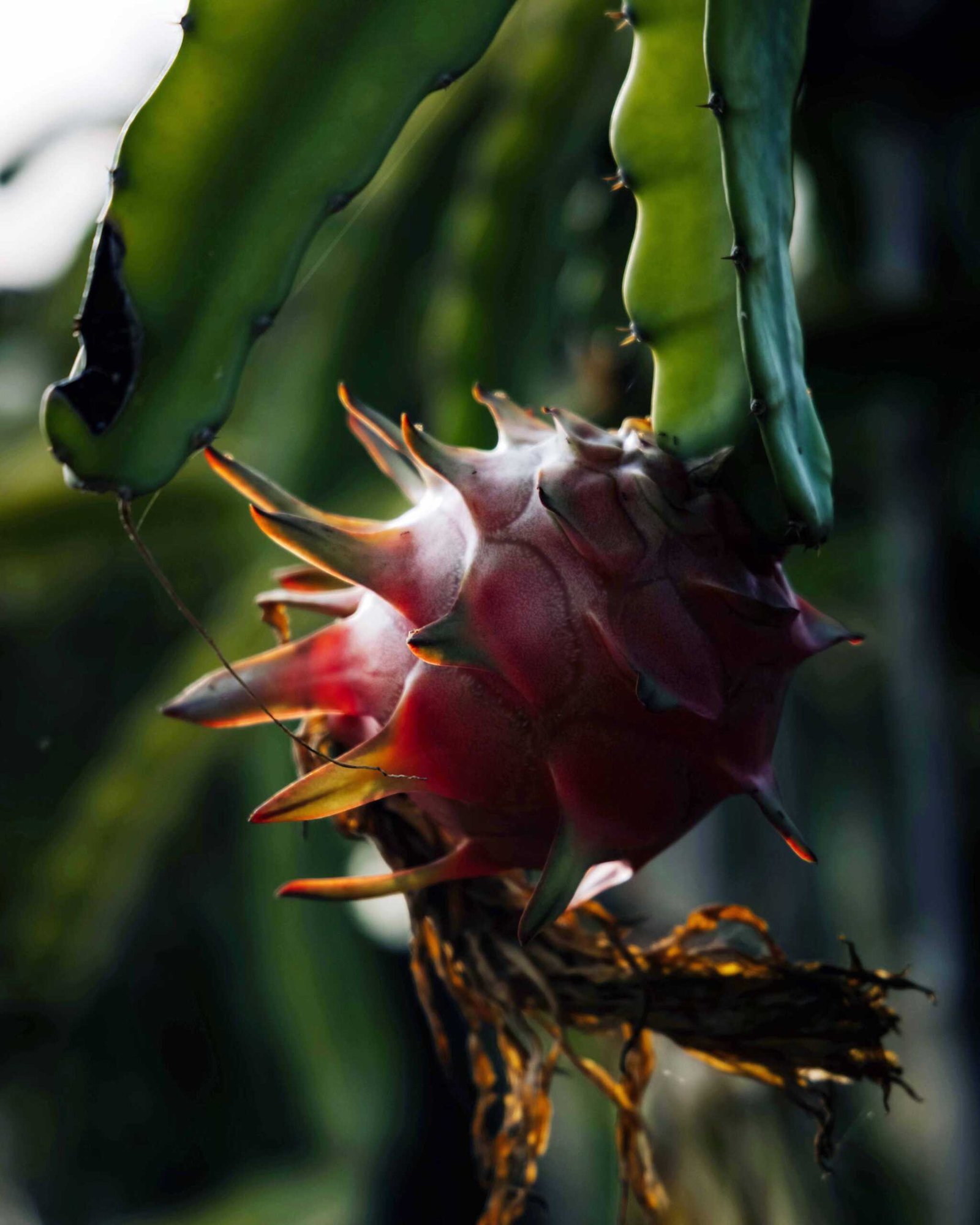
Red Dragon Fruit Cactus


$35.00
Scientific Name: Selenicereus undatus ‘Rosa’
Common Names: Red Dragon Fruit, Pitahaya, Pitaya Rosa
Overview: Selenicereus undatus, commonly known as Dragon Fruit, is a captivating cactus renowned for its exotic fruit and stunning nocturnal flowers. Originating from Central and South America, this climbing cactus features long, fleshy, and sprawling stems with a unique, wavy texture. The plant’s most dramatic feature is its large, fragrant white flowers that bloom at night, creating a spectacular display.
In addition to its striking appearance, this cactus produces the delicious and nutrient-rich dragon fruit, which is prized for its vibrant pink skin and sweet, refreshing flesh.
Caring for Your Red Dragon Fruit Cactus
(Selenicereus undatus)
Dragon Fruit Cactus is a tropical, climbing cactus known for its dramatic night-blooming flowers and vibrant, nutrient-rich fruit. Native to Central and South America, it thrives in warm climates but can also be grown successfully in containers, greenhouses, and bright indoor spaces.
With proper light, drainage, and seasonal care, this fast-growing plant can reward you with fruit within 1–2 years.
Light Requirements
Dragon Fruit needs strong sunlight to grow and produce fruit.
For best results:
-
Provide 6–8 hours of direct sunlight daily
-
Outdoors: Full sun is ideal
-
In very hot climates: Offer light afternoon shade
-
Indoors: Place near a south-facing window
-
Use grow lights if natural light is limited
Insufficient light may lead to weak growth and poor flowering.
Watering Guide
Unlike desert cacti, Dragon Fruit prefers slightly more consistent moisture — but it does not tolerate soggy soil.
Water when:
-
The top inch of soil feels dry
-
The plant is actively growing (spring through early fall)
Water thoroughly and allow excess water to drain.
During winter:
-
Reduce watering frequency
-
Allow soil to dry more between waterings
Overwatering is the most common problem and can lead to root rot.
Humidity and Temperature
As a tropical cactus, Dragon Fruit prefers:
-
Temperatures between 65°F–85°F (18°C–29°C)
-
Moderate to high humidity (around 60%)
In dry indoor environments:
-
Use a humidifier
-
Improve air circulation
-
Avoid placing near heating vents
Protect the plant from frost. Temperatures below 40°F (4°C) can cause serious damage.
Soil and Drainage
Proper drainage is essential for healthy root development.
Use:
-
A cactus or succulent potting mix
or -
A custom blend of sand, perlite, and peat moss
The ideal soil pH is slightly acidic to neutral (6.0–7.0).
Whether planted in the ground or in containers:
-
Ensure excellent drainage
-
Avoid heavy clay soil
-
Always use pots with drainage holes
Repot every 2–3 years to refresh soil and allow root expansion.
Fertilizing for Growth and Fruit Production
Dragon Fruit benefits from regular feeding during its active season.
During spring through early autumn:
-
Use a balanced fertilizer (10-10-10)
-
Apply every 4–6 weeks
-
Water before fertilizing to avoid root burn
Organic options like compost can improve soil structure and nutrient availability.
Stop fertilizing during winter dormancy.
Avoid over-fertilizing, as excess nutrients can reduce fruit quality.
Pruning and Support
Dragon Fruit is a climbing cactus and needs sturdy support.
Use:
-
A strong post
-
A trellis
-
A vertical frame
Pruning helps:
-
Remove weak or damaged stems
-
Improve airflow
-
Direct energy toward fruit production
-
Maintain manageable shape
Prune in late winter or early spring before active growth begins.
Clean tools before and after pruning to prevent disease spread.
Pests and Diseases
Dragon Fruit is relatively resilient but may occasionally encounter issues.
Common Pests
-
Aphids
-
Mealybugs
-
Spider mites
Treat early with neem oil or insecticidal soap.
Common Diseases
-
Root rot (from excess moisture)
-
Stem rot
-
Fungal infections like anthracnose
Prevention is key:
-
Avoid overwatering
-
Ensure proper drainage
-
Maintain good air circulation
Healthy stems should appear firm and bright green.
Flowering and Harvesting
One of the most exciting stages is flowering. Dragon Fruit produces large, fragrant blooms that open at night.
Fruit typically ripens 30–50 days after flowering.
Harvest when:
-
The skin turns bright red, pink, or yellow (depending on variety)
-
The fruit gives slightly when pressed
-
The scales begin to soften
Twist gently or cut with clean shears to avoid damaging the stem.
Fresh Dragon Fruit is rich in antioxidants, fiber, and vitamin C. It can be eaten raw, blended into smoothies, or added to salads and desserts.
Expert Growing Tips
-
Provide strong structural support early
-
Avoid letting young plants carry too many fruits
-
Maintain consistent watering during flowering
-
Protect from cold snaps
With consistent care, Dragon Fruit Cactus can remain productive for many years.
| Pot Size | Medium |
|---|
Related products

Cactus and Succulents
Cactus and Succulents
Cactus and Succulents
Cactus and Succulents
Cactus and Succulents

Cactus and Succulents
Cactus and Succulents
Cactus and Succulents