
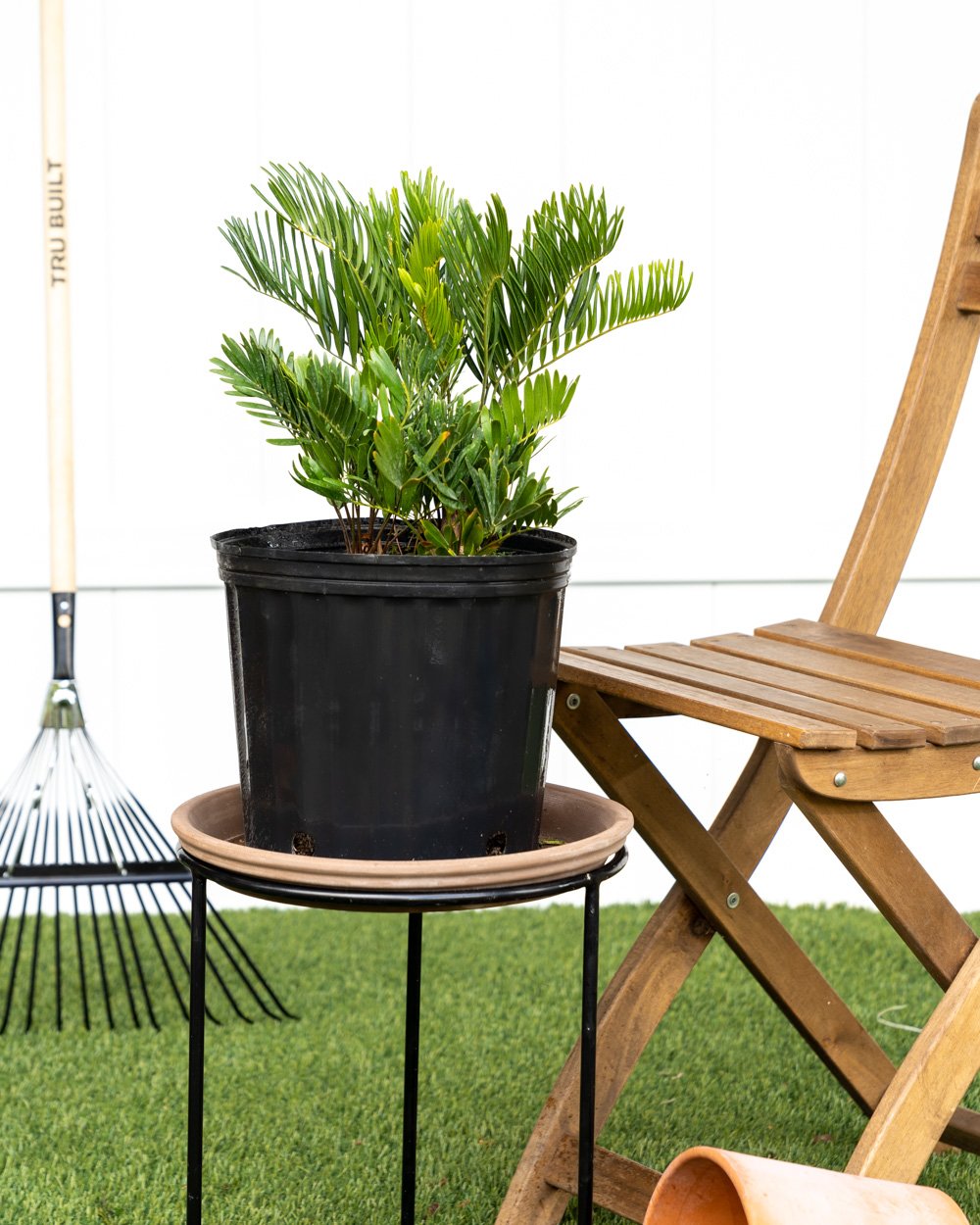
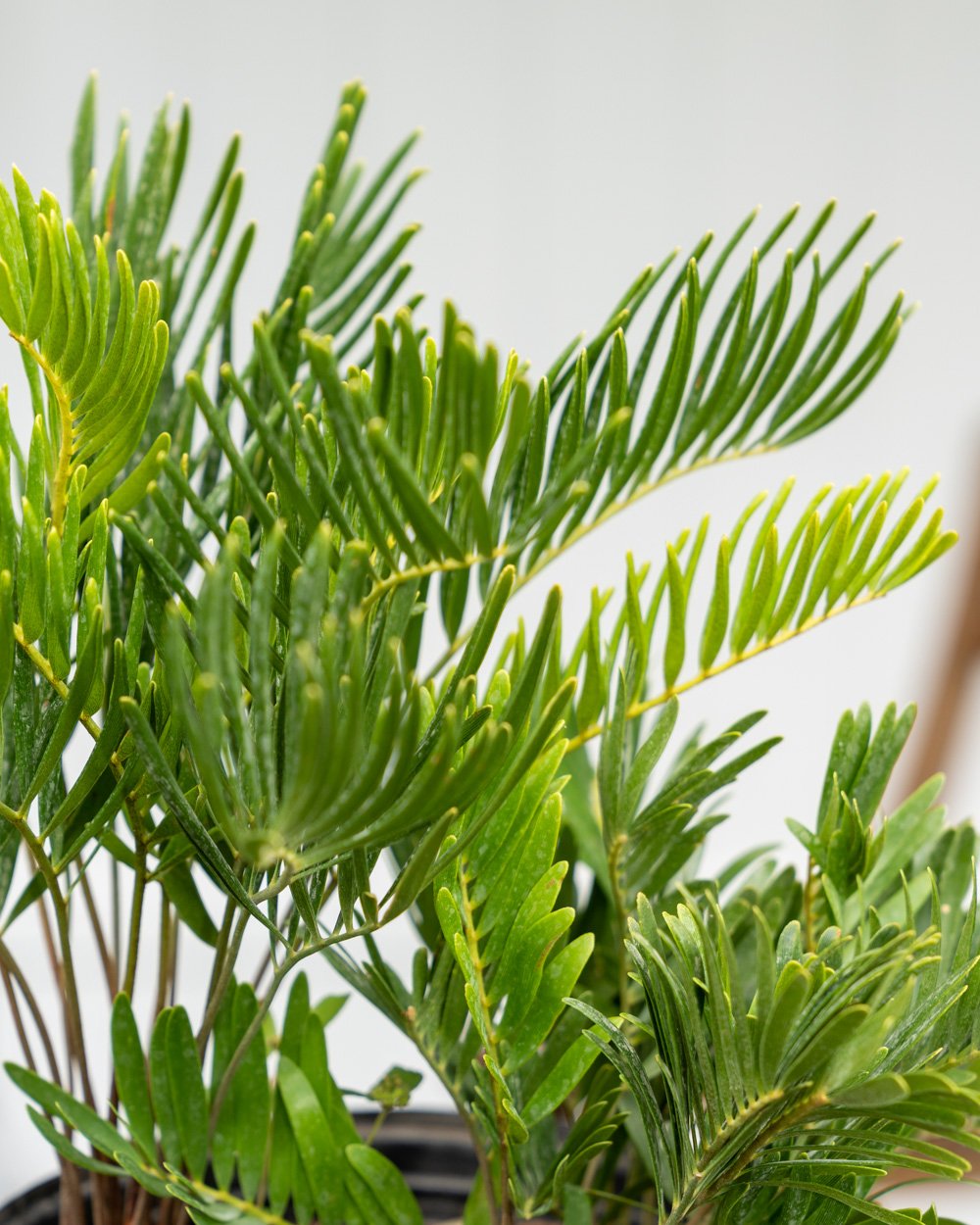
Florida Coontie
$72.00
Scientific Names: Zamia integrifolia ‘Floridana’ (fmr. Zamia pumila)
Common Names: Florida Coontie, Zamia Palm, Seminole Breadroot
Overview: Introduce the timeless elegance of Zamia integrifolia ‘Floridana’, also known as the Florida Coontie or Floridana Zamia, into your landscape or indoor collection. This ancient cycad, reminiscent of a time when dinosaurs roamed the earth, is a dwarf variety perfect for smaller spaces. Its glossy, feather-like fronds form a lush, cyclical crown, creating a striking visual impact in any setting. Perfectly sized for rock gardens, borders, or as a refined potted plant, it reaches a modest 2-3 feet in both height and spread. The Floridana Zamia is not only beautiful but also incredibly resilient, tolerating a range of light conditions from dappled shade to full sun and thriving in well-drained soil. It’s a low-maintenance, drought-resistant choice once established, ideal for busy gardeners seeking a prehistoric touch of greenery that requires minimal care.
Caring for Your Florida Coontie
(Zamia integrifolia)
The Florida Coontie, also known as Coontie Palm or Seminole Breadroot, is one of North America’s most ancient plant species. Although it resembles a small palm, it is actually a cycad — a group of prehistoric plants that existed millions of years before flowering plants evolved.
Native to Florida and the southeastern United States, Coontie is valued for its feathery, evergreen foliage and impressive resilience. It works beautifully in native landscapes, low-water gardens, and even large containers.
Once established, it is remarkably hardy and requires very little maintenance.
Light Requirements
Florida Coontie is highly adaptable when it comes to light.
It can grow in:
-
Full sun
-
Partial shade
-
Dappled sunlight
For best appearance:
-
In full sun: Growth stays compact with bright green foliage
-
In partial shade: Leaves grow slightly longer and darker
A mix of sun and shade throughout the day often produces the healthiest growth.
If grown indoors:
-
Place near a bright window
-
Provide indirect or filtered sunlight
-
Avoid extremely dark areas
While it tolerates lower light, growth may slow.
Watering Guide
Coontie is naturally drought-tolerant, especially once established.
During the first year after planting:
-
Water regularly to help roots establish
-
Allow soil to dry slightly between waterings
After establishment:
-
Water only during extended dry periods
-
Deep, occasional watering is better than frequent shallow watering
Overwatering is the main risk. Poor drainage can cause root rot.
Always ensure soil drains well and never remains soggy.
Soil and Drainage
Coontie thrives in well-draining soil and adapts to many soil types.
It performs well in:
-
Sandy soils
-
Loamy soils
-
Slightly rocky soils
If planting in heavy clay soil:
-
Amend with sand or perlite
-
Improve drainage before planting
For container plants:
-
Use a well-draining cactus or palm mix
-
Ensure the container has drainage holes
This plant tolerates acidic to neutral soil pH and does not require special soil chemistry.
Temperature and Climate
Florida Coontie thrives in warm climates and is hardy in USDA zones 8–11.
It can tolerate short cold spells down to approximately 20°F (-6°C), but prolonged freezing may damage foliage.
In colder regions:
-
Grow in containers
-
Move indoors during winter
-
Protect from frost and cold winds
It handles hot, humid summers extremely well and is well-suited for coastal and southern landscapes.
Fertilization
Coontie evolved in nutrient-poor soils and does not require heavy feeding.
Apply:
-
A balanced, slow-release fertilizer (8-8-8 or 10-10-10)
-
Once in spring
-
Optional second application in late summer
Avoid over-fertilizing. Too many nutrients can lead to weak growth and root stress.
In many native landscapes, fertilization may not be necessary at all.
Pruning and Maintenance
Coontie is naturally tidy and slow-growing.
Maintenance includes:
-
Removing yellow or damaged fronds
-
Trimming at the base using clean tools
There is no need for shaping or aggressive pruning.
Because it grows slowly, it rarely outgrows its space.
Pest and Disease Management
Florida Coontie is generally pest-resistant.
Occasional issues may include:
-
Scale insects
-
Mealybugs
Inspect fronds periodically, especially indoors.
Treat infestations early with:
-
Insecticidal soap
-
Neem oil
The most common disease concern is root rot, caused by overwatering or poorly draining soil.
Prevention is simple:
-
Use well-draining soil
-
Avoid excess watering
-
Maintain airflow around the plant
Important Safety Note
While Coontie supports native wildlife, all parts of the plant — especially the seeds — contain toxins.
If ingested, they can be harmful to pets and children.
Plant responsibly if you have animals or young family members.
Expert Growing Tips
-
Ideal for native Florida landscaping
-
Excellent choice for drought-tolerant gardens
-
Works well under trees or in filtered light
-
Very resistant to wind and coastal conditions
Coontie is also the host plant for the Atala butterfly, making it an important addition to wildlife-friendly gardens.
| Pot Size | Small, Medium, Large, Extra Large |
|---|---|
| Zone | 10a, 10b, 8a, 8b, 9a, 9b |
| Mature Height | 2ft – 3ft |
| Spacing | 3ft – 4ft |
Related products
Cactus and Succulents
Cactus and Succulents
Cactus and Succulents
Cactus and Succulents
Cactus and Succulents
Cactus and Succulents
Cactus and Succulents
Cactus and Succulents