
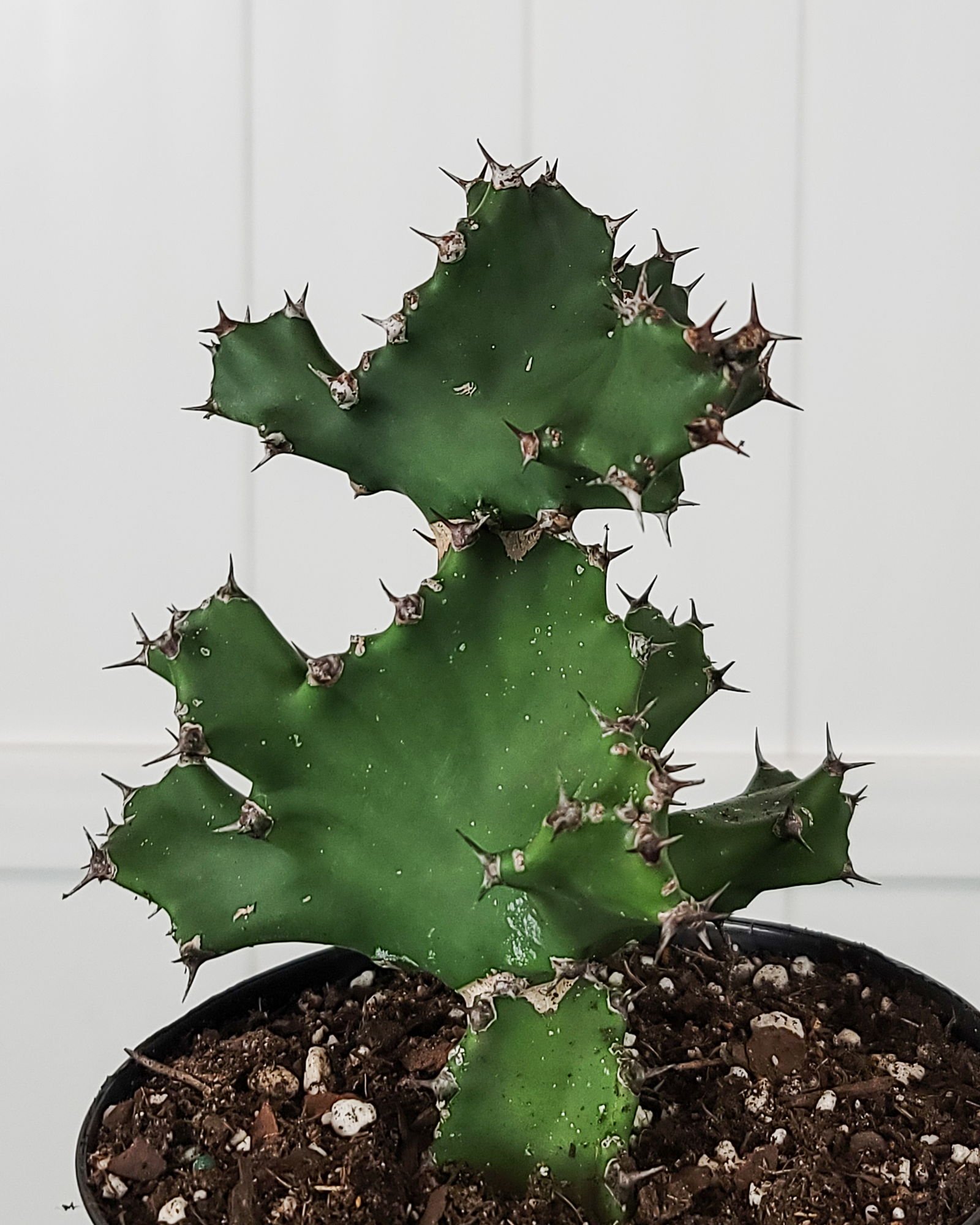
Spiral Euphorbia

$35.00
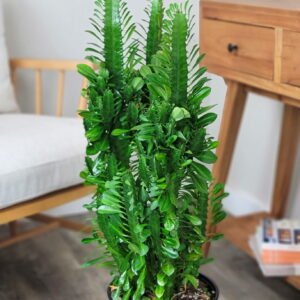
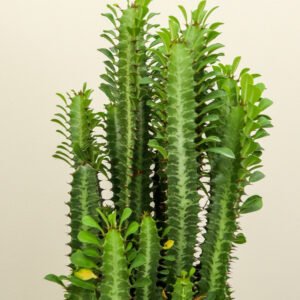
Scientific Name: Euphorbia tortilis
Common Names: Spiral Euphorbia, Twisted Spurge
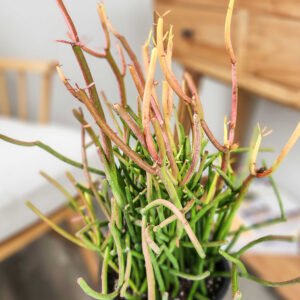
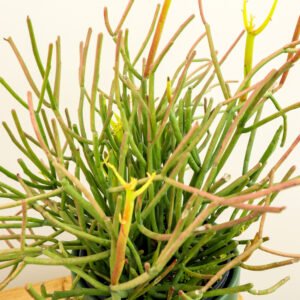
Overview: Euphorbia tortilis, also known as the Twisted Spurge, is a unique succulent native to arid regions of Africa. It features twisted, spiraling stems that grow in intricate patterns, giving the plant a distinctive, sculptural appearance. The deep green stems are adorned with small, sharp thorns and can grow up to 3 feet tall in optimal conditions, making it a striking addition to any succulent collection. It prefers warm temperatures and can be grown outdoors in frost-free areas or indoors as a statement piece.
Caring for Your Spiral Euphorbia Plant
Euphorbia plants are often confused with cacti because of their thick stems and sculptural shapes. However, they belong to the Euphorbiaceae (spurge) family, not the cactus family.
There are hundreds of Euphorbia varieties. Some look tall and column-shaped, while others grow in branching forms. One thing they all share is a white, milky sap inside the stems. This sap is toxic and should be handled carefully.
With the right conditions, Euphorbia plants are hardy, low-maintenance, and long-lasting.
Light Requirements
Euphorbia plants grow best in bright, indirect sunlight.
They can tolerate some direct sun, especially in the morning. However, strong afternoon sunlight can cause sunburn, particularly if the plant is not used to it.
For healthy growth:
-
Place near a south- or west-facing window
-
Provide filtered light during peak sun hours
-
Rotate the plant occasionally for even growth
-
Use grow lights if natural light is limited in winter
If the plant becomes stretched or pale, it may need more light.
Watering Guide:Spiral Euphorbia
Watering is the most important part of Euphorbia care.
These plants store water in their stems, making them naturally drought-tolerant. Too much water can quickly cause root rot.
Follow this simple routine:
-
Allow the soil to dry completely before watering
-
Water deeply until excess drains from the bottom
-
Never let the pot sit in standing water
Seasonal Watering
Spring and Summer (Growing Season):
Water every 2–3 weeks, depending on temperature and humidity.
Fall and Winter (Dormant Season):
Reduce watering to once a month or less.
Before watering, insert your finger about two inches into the soil. If it feels dry, it is safe to water.
Avoid splashing water directly onto the stem, as excess moisture can encourage fungal problems.
Soil and Potting
Good drainage is essential.
Use a cactus or succulent potting mix, or create your own blend with:
-
Perlite
-
Pumice
-
Coarse sand
The goal is to prevent water from sitting around the roots.
Euphorbia plants grow slowly, so repotting is rarely needed. When you do repot:
-
Choose a container one size larger
-
Ensure drainage holes are present
-
Wear gloves to avoid sap contact
Repotting every 2–3 years is usually enough.
Fertilizing
Euphorbia plants are light feeders.
During spring and summer, you can use:
-
A balanced, water-soluble fertilizer
-
Diluted to half strength
-
Once per month
A cactus fertilizer works well.
Do not fertilize during fall and winter. Feeding during dormancy can lead to weak, unhealthy growth.
Pruning and Maintenance
Most Euphorbia plants keep their natural shape without much pruning. However, you may trim:
-
Damaged stems
-
Dead sections
-
Overgrown branches
Use clean, sharp pruning tools and cut at natural joints where branches meet.
After cutting, the plant will form a protective callus over the wound.
Always clean tools after use to prevent spreading disease.
Safety Warning
The white sap inside Euphorbia stems is toxic.
It can:
-
Irritate skin
-
Cause eye discomfort
-
Be harmful if swallowed
For safe handling:
-
Wear gloves
-
Avoid touching your face
-
Wash hands after pruning
-
Keep away from pets and children
If sap contacts skin, rinse immediately with water.
Expert Care Tips
From practical growing experience:
-
Keep temperatures between 60–80°F (15–27°C)
-
Avoid sudden temperature changes
-
Provide good airflow
-
Do not mist the plant
Healthy Euphorbia plants have firm stems and steady growth. Soft or mushy stems usually indicate overwatering.
Experience nonstop excitement at Velobet with top-quality slots, massive rewards, and endless entertainment!
| Pot Size | Medium |
|---|
Related products
Best Sellers
Cactus and Succulents
Cactus and Succulents
Cactus and Succulents
Cactus and Succulents
Cactus and Succulents
Cactus and Succulents
Cactus and Succulents