
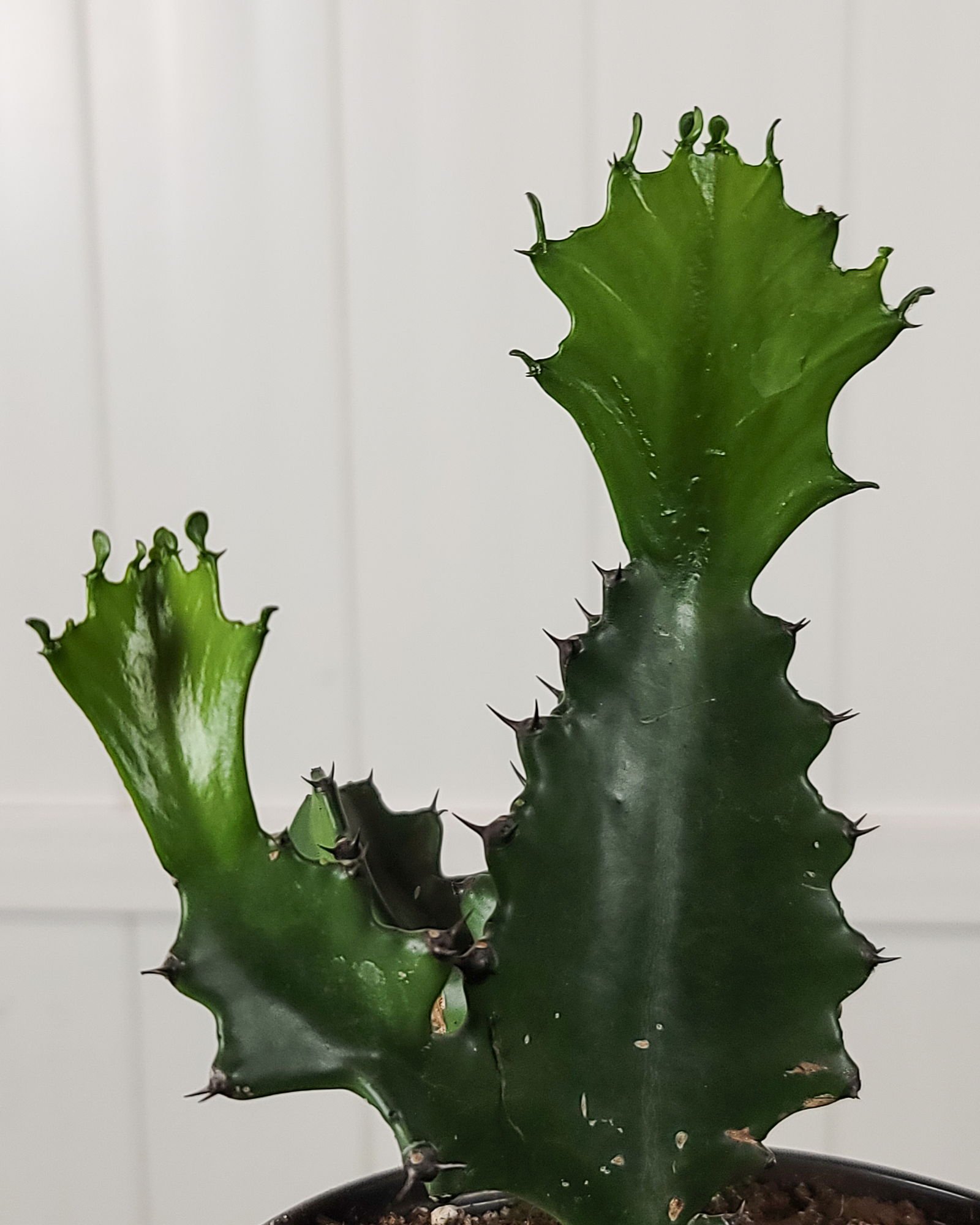
Cow Horn Cactus

$35.00
Scientific Name: Euphorbia grandicornis
Common Names: Cow Horn Cactus, Cow’s Horn, Rhino Thorn Bush
Overview: Euphorbia grandicornis, commonly known as the Cow’s Horn or Rhino Horn Euphorbia, is a striking succulent native to South Africa and Mozambique. This eye-catching plant is recognized for its triangular, segmented green stems with sharp, horn-like ridges along the edges. Its unique, architectural appearance makes it a standout addition to any succulent collection.
The Euphorbia grandicornis can grow up to 6 feet tall in ideal conditions, producing small, inconspicuous yellow flowers during the growing season. Though drought-tolerant, it thrives best in bright, indirect sunlight and well-draining soil.
How to Care for Your Euphorbia Plant:Cow Horn Cactus
Euphorbia is often confused with cactus because of its similar shape and structure. However, it belongs to the Euphorbiaceae (spurge) family, not the cactus family.
There are many types of Euphorbia. Some look tall and column-like, while others grow low and wide. One thing they all share is a white, milky sap inside their stems. This sap is toxic and requires careful handling.
With the right care, Euphorbia plants are strong, low-maintenance, and long-lasting additions to your indoor or outdoor space.
Light Requirements
Euphorbia plants grow best in bright, indirect light.
They can handle some direct sunlight, but sudden exposure to strong midday sun may cause leaf or stem burn. If you move your plant to a brighter spot, do it gradually so it can adjust.
For best results:
-
Place near a south- or west-facing window
-
Provide filtered sunlight during peak afternoon hours
-
Use grow lights in winter if natural light is limited
If the plant becomes stretched or leggy, it is likely not receiving enough light.
Watering Schedule
The most common mistake with Euphorbia is overwatering.
These plants store water in their stems, which makes them drought-tolerant. Too much moisture can cause root rot and fungal issues.
Follow this simple watering guide:
-
Allow soil to dry completely between waterings
-
Water deeply until it drains from the bottom
-
Always use a pot with drainage holes
Seasonal Watering
Spring & Summer:
Water every 2–3 weeks, depending on how quickly the soil dries.
Fall & Winter:
Reduce watering to once a month or less. Growth slows during this time.
Before watering, insert your finger about 2 inches into the soil. If it feels dry, it is time to water.
Avoid letting water sit on the stem, as this may cause rot.
Soil and Repotting
Euphorbia plants need well-draining soil to stay healthy.
A cactus or succulent potting mix works perfectly. You can also improve drainage by adding:
-
Perlite
-
Pumice
-
Coarse sand
These plants grow slowly and do not require frequent repotting.
When repotting:
-
Choose a container one size larger
-
Ensure proper drainage
-
Wear gloves to avoid contact with sap
Repotting is typically needed every 2–3 years.
Fertilizing
Euphorbia does not require heavy feeding.
During the growing season (spring and summer), use:
-
A balanced, water-soluble fertilizer
-
Diluted to half strength
-
Once per month
You may also use a cactus-specific fertilizer.
Avoid fertilizing during fall and winter. Feeding during dormancy can cause weak, unhealthy growth.
Pruning and General Maintenance
Most Euphorbia plants maintain their shape naturally. However, occasional pruning may be needed.
Trim when:
-
Stems are damaged
-
Growth becomes uneven
-
Dead sections appear
Use clean, sharp tools and cut at natural joints where branches meet.
After cutting, the plant will form a protective callus over the wound.
Always disinfect tools after pruning to prevent disease spread.
Safety Precautions:Cow Horn Cactus
The white sap inside Euphorbia stems is toxic.
It can:
-
Irritate skin
-
Cause eye discomfort
-
Be harmful if ingested
For safe handling:
-
Wear gloves
-
Avoid touching your face
-
Keep away from pets and children
-
Wash hands after contact
If sap touches your skin, rinse immediately with water.
Expert Care Tips for Long-Term Health
Based on horticultural best practices:
-
Avoid sudden temperature drops
-
Keep in temperatures between 60–80°F (15–27°C)
-
Ensure good air circulation
-
Rotate the plant occasionally for even growth
Healthy Euphorbia plants are firm, upright, and evenly colored.
Soft stems or discoloration usually indicate watering issues.
| Pot Size | Medium |
|---|
Related products
Cactus and Succulents
Cactus and Succulents
Cactus and Succulents
Cactus and Succulents
Cactus and Succulents
Cactus and Succulents
Cactus and Succulents
Cactus and Succulents