
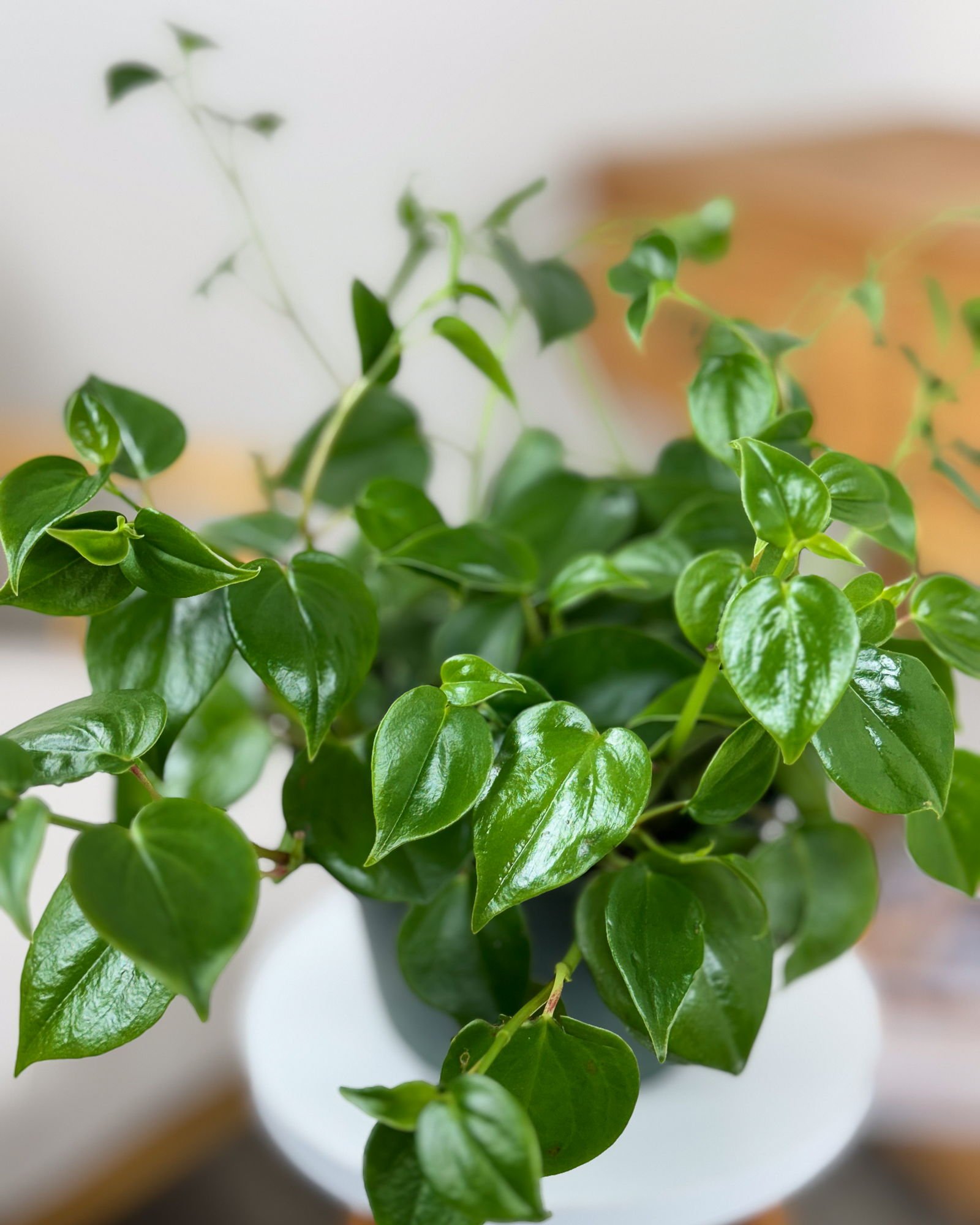
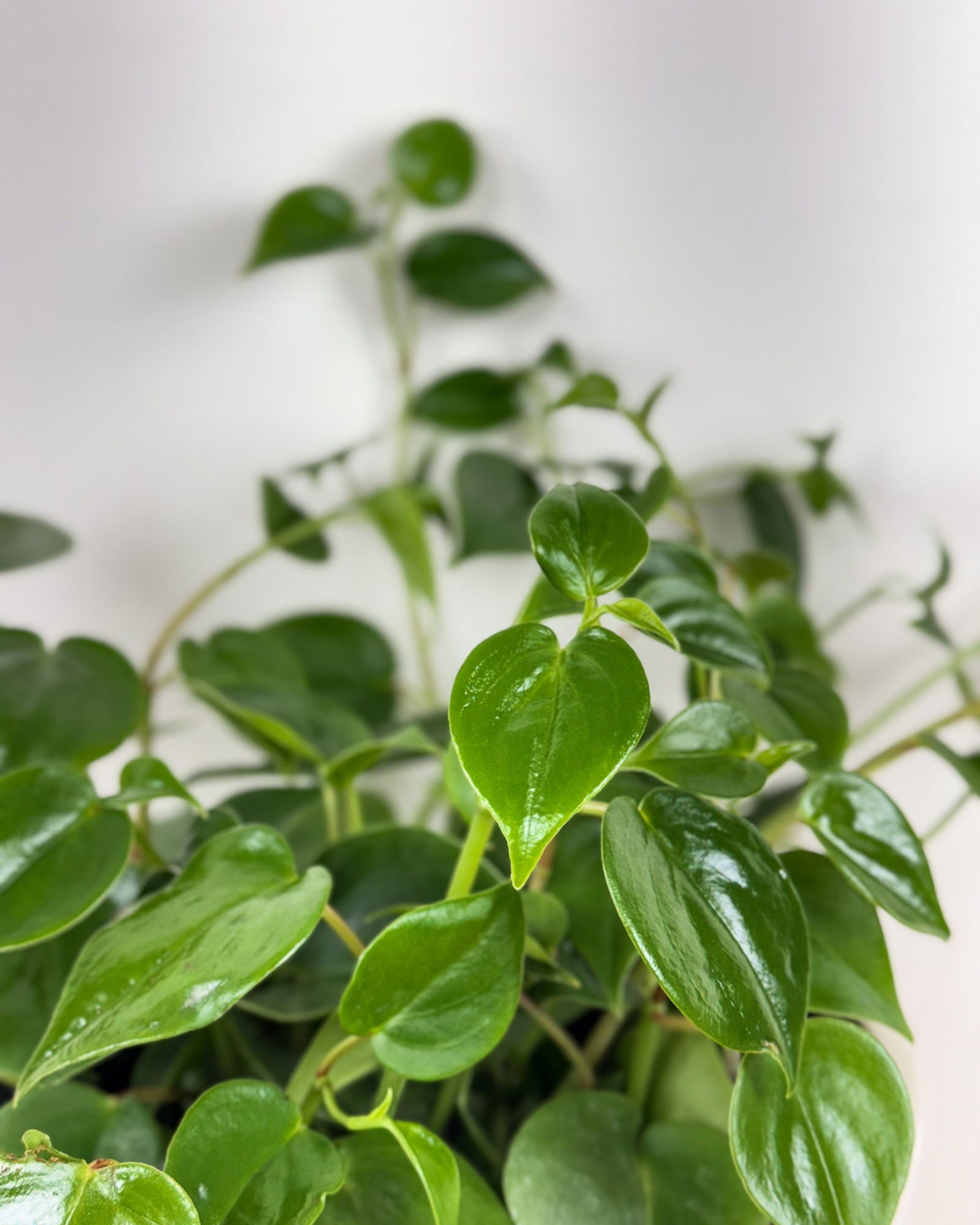
Peperomia scandens
Price range: $33.00 through $71.00
Scientific Name: Peperomia scandens
Common Names: Green Peperomia, False Philodendron, Fauxthos
Overview: The Peperomia scandens, also known as the Cupid Peperomia or False-Philodendron, is a charming trailing plant that brings a touch of whimsy to any indoor setting. Originating from South America, particularly the Amazon region, this Peperomia species features heart-shaped, succulent leaves with delightful variegation, ranging from creamy white to light green. Its compact growth habit makes it perfect for hanging baskets or as a trailing accent in mixed planters. Low maintenance and adaptable, the Peperomia scandens thrives in indirect light and prefers well-draining soil.
Caring for Your Peperomia scandens
Peperomia plants are popular for their attractive foliage, compact growth, and easy-care nature. Whether you are growing Peperomia Scandens, Variegata, or another variety, these plants adapt well to indoor environments when given proper care.
They are not difficult to grow — they simply need the right balance of light, water, and drainage.
Light Requirements
Peperomia grows best in bright, indirect light.
In nature, these plants grow under tree canopies, where they receive filtered sunlight. That is why direct, harsh sunlight can damage their leaves.
For best results:
-
Place near an east- or west-facing window
-
Provide bright, indirect light
-
Avoid strong midday sun
-
Rotate the plant occasionally for even growth
Peperomia can also grow under fluorescent or LED grow lights, making it ideal for offices or indoor spaces.
If your plant looks pale or stops growing, it may need more light.
Soil and Drainage
Proper drainage is essential for healthy roots.
Use:
-
A well-draining indoor potting mix
-
Or a mix amended with perlite and peat moss
The soil should stay lightly moist but never soggy.
Always use a pot with drainage holes. Waterlogged soil can quickly cause root rot.
Watering Guide
Peperomia plants store water in their leaves and stems, which makes them somewhat drought-tolerant.
Overwatering is the most common mistake.
Before watering:
-
Check that the top 2 inches of soil are dry
-
Water deeply but infrequently
-
Empty any excess water from the saucer
Typically, watering every 7–14 days works well, but frequency depends on light, temperature, and humidity.
During winter, reduce watering since growth slows down.
If leaves feel soft or mushy, the plant may be overwatered.
Fertilizing
Peperomia is a light feeder.
You do not need heavy fertilization to keep it healthy.
During spring and summer:
-
Use a balanced liquid houseplant fertilizer
-
Dilute to half strength
-
Feed once a month
Avoid fertilizing in fall and winter when the plant is not actively growing.
Too much fertilizer can damage roots and cause weak growth.
Common Problems
Although Peperomia is generally low-maintenance, a few issues may appear.
Pests
Occasionally, you may notice:
-
Spider mites
-
Mealybugs
-
Fungus gnats
These pests feed on plant sap and can weaken the plant.
If detected early, treat with insecticidal soap or neem oil and improve air circulation.
Diseases
Most diseases are related to overwatering.
Excess moisture can cause:
-
Root rot
-
Fungal infections
-
Leaf spots
To prevent this:
-
Let soil dry between waterings
-
Avoid wetting the leaves
-
Ensure proper drainage
Healthy Peperomia leaves should feel firm and look vibrant.
Pruning and Maintenance
Peperomia does not require heavy pruning.
However, trimming can help:
-
Maintain shape
-
Encourage fuller growth
-
Remove damaged leaves
Use clean scissors or pruning shears to avoid spreading disease.
Regular light trimming encourages bushier growth.
Propagation
Peperomia is very easy to propagate.
You can use:
-
Stem cuttings
-
Leaf cuttings (depending on the variety)
Steps:
-
Cut a healthy stem below a node
-
Place in water or moist soil
-
Keep in bright, indirect light
-
Wait for roots to develop
Roots typically form within a few weeks.
Propagation is a simple way to grow new plants or share with others.
Potting and Repotting
Peperomia is a slow-growing plant.
Most plants only need repotting every 3–5 years.
Repot if:
-
Roots are circling the pot
-
Growth slows significantly
-
Soil stays wet too long
When repotting:
-
Choose a pot only 1–2 inches larger
-
Use fresh, well-draining soil
-
Avoid oversized containers
If the plant has been overwatered, repotting into dry soil may help it recover.
| Pot Size | Medium, Hanging Basket, Medium, Large, Hanging Basket |
|---|
Related products
Cactus and Succulents
Cactus and Succulents
Cactus and Succulents
Cactus and Succulents
Cactus and Succulents
Cactus and Succulents
Cactus and Succulents
Cactus and Succulents